Buddhist Memorial Ceremony on the 49th Day of Death – A Path of Transformation and Letting Go
In an hour of silence and farewell, I accompany you with an open heart and reverent mindfulness. As a freelance funeral speaker in Switzerland, I design farewell ceremonies marked by dignity, symbolic power, and love – rituals that provide comfort, build bridges between heaven and earth, and honor the deceased in gratitude. The 49th day of death marks a mystical turning point in the Buddhist tradition. Here, the soul leaves the Bardo, the intermediate state, and enters the cycle of rebirth.
As Master Reding, a funeral speaker with a Christian and spiritual background, I combine in such ceremonies the clarity of Zen with the depth of Christian wisdom to create a grieving process that is open to all faiths – without psalms, yet with words that symbolically honor life and death.
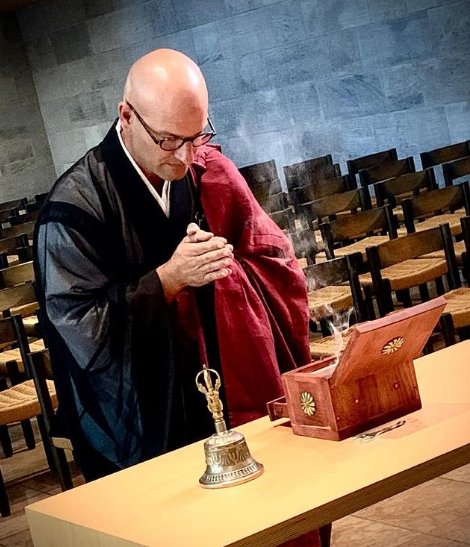
The Significance of the 49th Day of Death in the Buddhist Tradition
The 49th day of death is no ordinary memorial day, but a sacred threshold moment that symbolizes the conclusion of a seven-week transition. In Buddhist teachings, this Bardo is described as a time of letting go, clarification, and transformation – a phase in which consciousness detaches from the earthly. As a funeral speaker, I help families consciously navigate this grieving process by incorporating rituals such as prayers and offerings that guide the soul. It is midnight, the hours pass – in this nocturnal silence, the farewell becomes a spiritual renewal that offers comfort in impermanence.
The Sequence of a Buddhist Memorial Service on the 49th Day of Death – Rituals of Symbolic Power
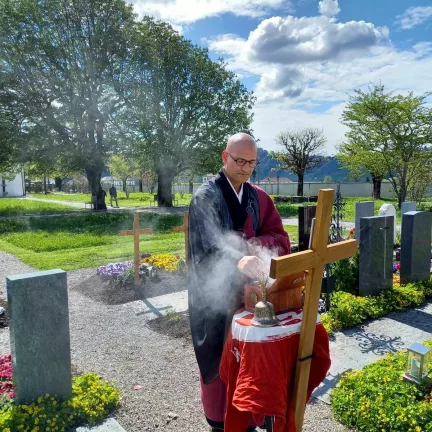
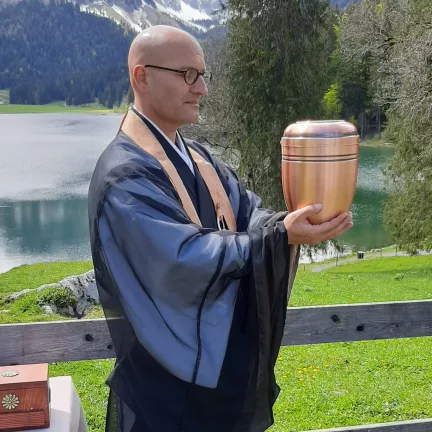
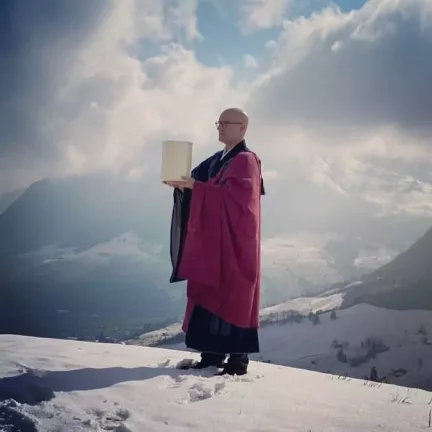
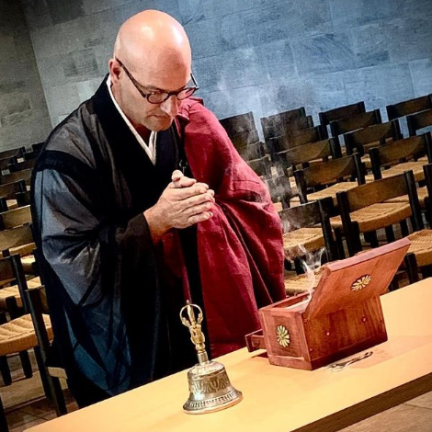
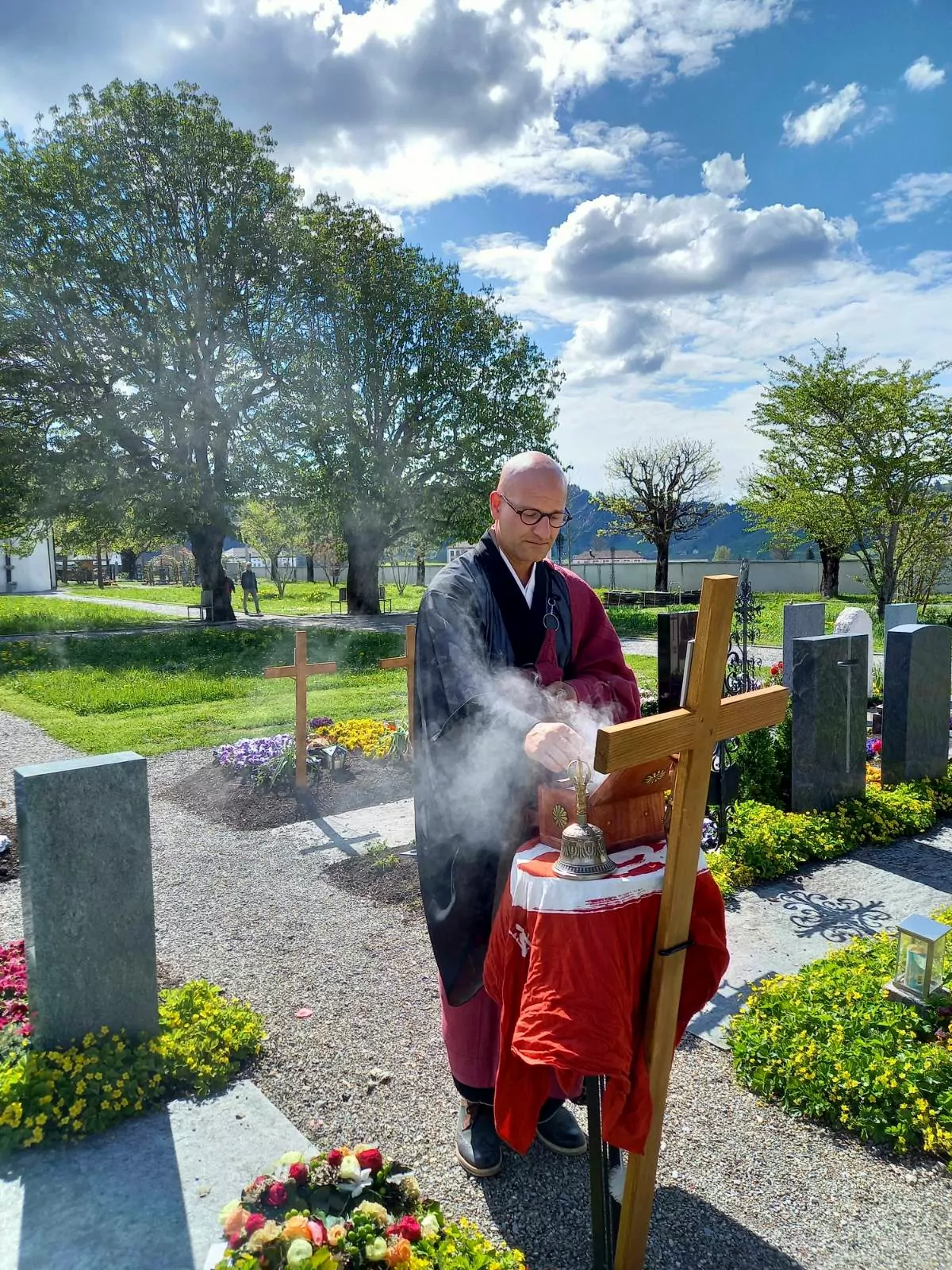
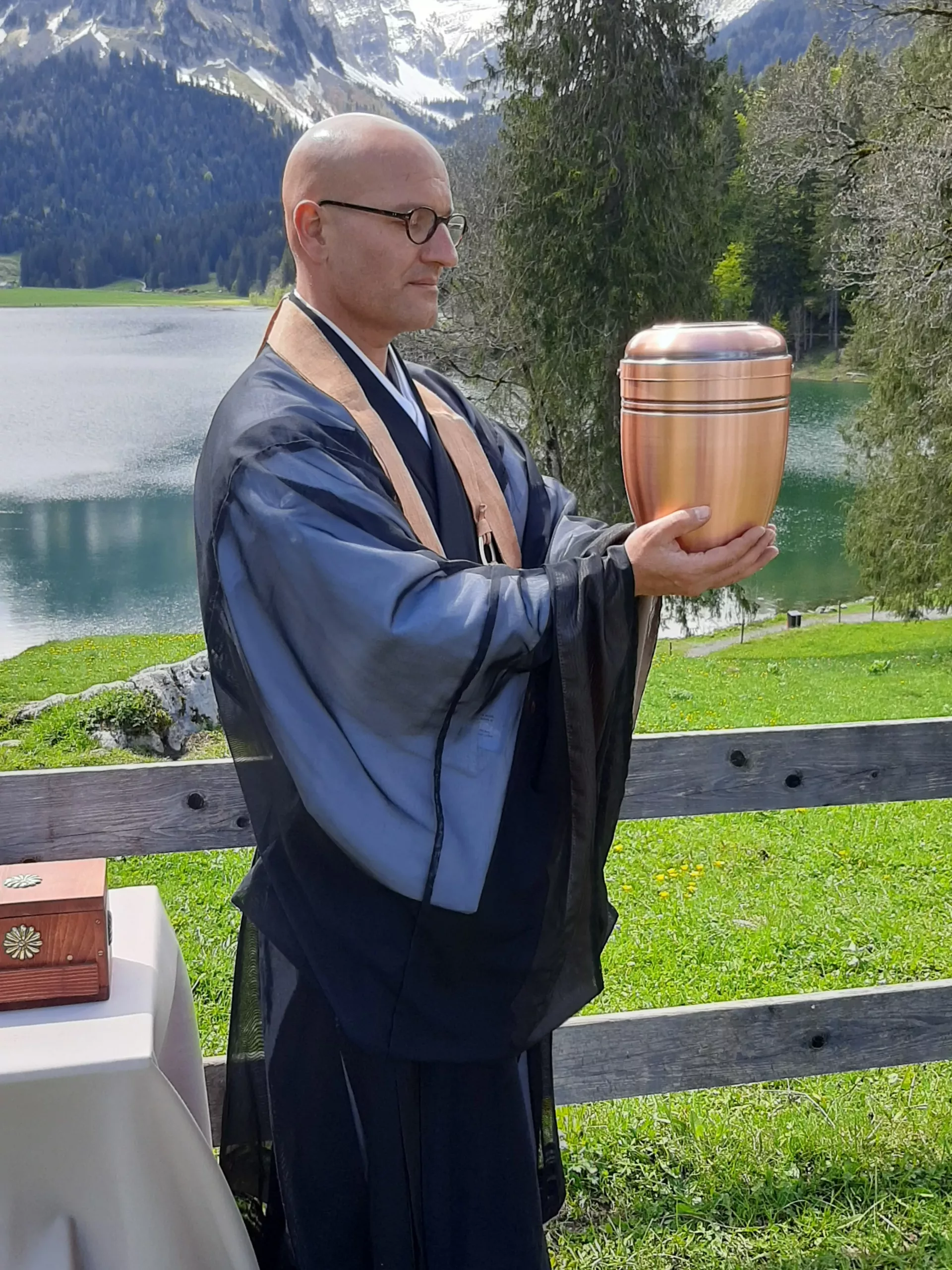
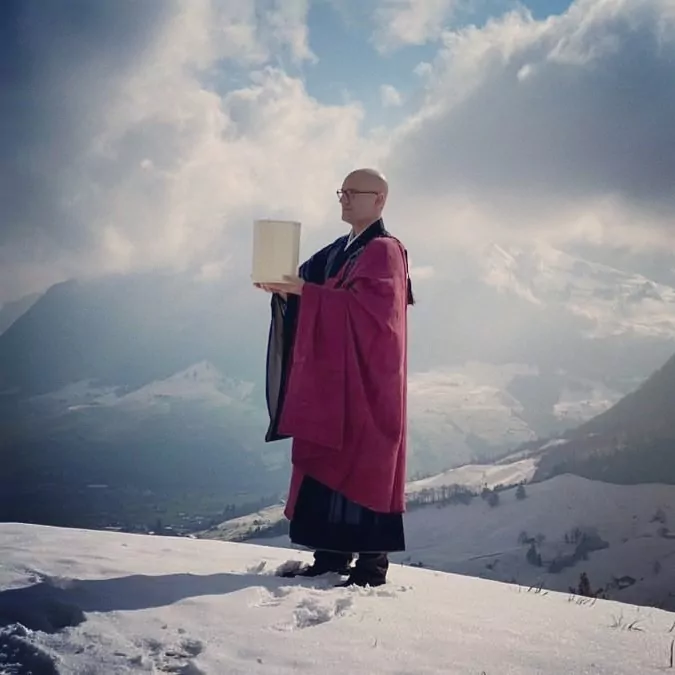
A Buddhist memorial ceremony on the 49th day of death often begins with a silent prayer that gathers the attendees in mindfulness, followed by mystical elements such as lighting incense and sandalwood. The Phoenix ritual can play a central role here: Each participant lights a pinch of incense, whose rising smoke symbolizes letting go – like the Phoenix rising anew from the ashes. As a freelance funeral speaker, I adapt the sequence to alternative burial forms: Whether a burial in the cemetery, a scattering of ashes by the lake or in the mountains, the ceremony reflects the personality of the deceased.
Through words that emphasize quiet strength and self-determination, and through the transition to a prayer like the Our Father as a bridge to Christian values of forgiveness and peace, a space emerges without dogmatic boundaries.
Integration of Christian and Buddhist Elements in the Farewell Ceremony
My ceremonies as Master Reding connect the clarity of Zen with the depth of Christian wisdom and the monastic tradition. The grieving process integrates Christian values like mercy and hope with Buddhist impermanence: A new name, the Kaimyo, marks the entry into a new form of existence. Whether non-denominational, Christian, or spiritual, relatives of all traditions find comfort – for example, through a dedication prayer that bestows all good upon the deceased. The burial becomes a place of spiritual depth that offers comfort in the diversity of faith.
Alternative Burial Forms and Personal Customization
The grieving process allows for diverse burial forms: From traditional burials in the cemetery to alternative rituals such as scattering ashes in the mountains, by the lake, or in the forest. As a freelance funeral speaker in Switzerland, I plan with you a memorial service that honors the deceased – whether through a silent prayer that symbolizes life and death, or through personal symbols that build bridges between heaven and earth. In this mystical atmosphere, where the hours of the night pass, you find comfort and renewal, regardless of your faith.
Let us together build a bridge that spans the stream of time and release the deceased in peace. As Master Reding, I stand by your side with empathy to make your farewell ceremony a moment of dignity and love.